FELIX, TATI, ZARA: REMEMBERING RUE DE RENNES

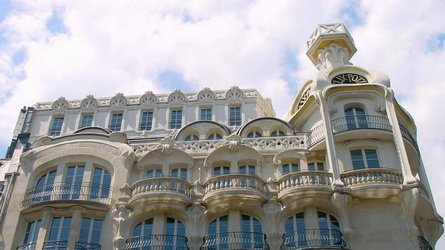
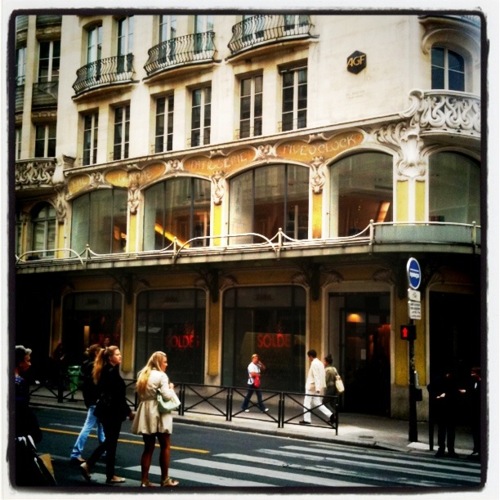
Nearly every day, after an invigorating workout at my Montparnasse gym, I pull open a big green door on rue de Rennes to step into the human traffic in one of Paris’s busiest commercial streets. And every time, the first thing that comes into sight is the faded yellow-and-green façade of the Art Nouveau building directly across the road.
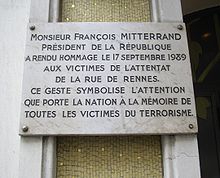
That building today is a Zara retail store where shoppers look for “cheap-and-chic” clothing. Most who pass by on the pavement are oblivious to the significance of that building — both historically and architecturally. Few look up to admire its classic Art Nouveau design. Even fewer stop to read the plaque that commemorates a horrific event that took place on that very spot precisely 25 years ago.
I remember. I was a graduate student in Paris in the mid-1980s when a series of bomb blasts struck the city, terrorising Parisians and confusing authorities who had no idea who was behind the mayhem. The bombings had begun a few years earlier when terrorists threw a grenade into the famous Jewish restaurant Goldenberg in Le Marais district. The explosion ripped through the restaurant while terrorists opened fire on passersby. Six people were killed in the attack. Goldenberg, once the hub of Jewish life in Paris, is now closed.
The deadliest attack occurred on rue de Rennes: the target was the Art Nouveau building whose façade comes into view when I leave my gym (see my photo below, taken recently). Twenty-five years ago, the store was not a Zara outlet; it was a Tati discount shop, frequented mainly by low-income shoppers hunting for bargains. On a Wednesday afternoon in September 1986, terrorists tossed a bomb in a rubbish bin just outside the Tati store. They had chosen Wednesday deliberately: in France, kids were off school that day and the shops were crowded with mothers and their children. When the bomb exploded, it ripped through the Tati store — killing seven people and injuring fifty-five others.
Time magazine covered the attack under the headline, The Bombs of September, describing the scene this way: “On the sidewalk, a bare, shredded pair of legs protruded from a plastic tarp. One foot was covered with a bloody sock, the other had been blown off. Passersby tried to comfort the wounded. A young girl was flanked by a man who stroked her dark hair and another who held her hand. A boy in a red-and-blue jacket cried uncontrollably. After the first few minutes, the sounds of weeping and shouting gave way to silence, broken only by the wail of sirens.”
The Tati bombing that afternnon was the fifth terrorists attack on Paris in only ten days — leaving 10 dead and 257 people injured. I can remember vividly the fear and panic in Paris at the time. Parisians lived in constant dread that a bomb could go off anywhere at any time. When I went grocery shopping at the local Monoprix on rue de Rennes, guards at the door searched bags and scanned our bodies before letting us enter. There was airport-level security in every department store. Nobody had any idea who was behind these murderous attacks or what was motivating them.
In retrospect, the bomb attacks on Paris in the 1980s were a dark omen of more horrendous acts of terrorism to come — culminating tragically with 9/11, whose tenth anniversary is imminent. The terrorist attacks on Paris occurred twenty-five years ago.
Today the old Tati building is still standing, a proud and humble survivor of brutal, bloody and senseless violence. The only remaining vestige of the September 1986 is the plaque placed three years later on the wall outside. It reads: “Monsieur François Mitterrand, President de la République, a rendu hommage le 17 septembre 1989, aux victimes de l’attentat de la rue de Rennes. Ce geste symbolise l’attention que porte la nation à la mémoire de toutes les victimes du terrorisme.”
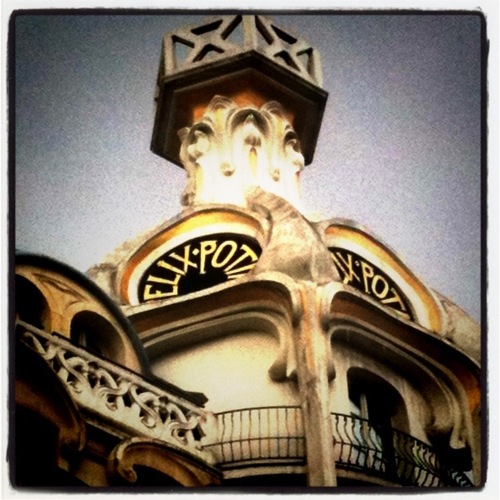
 The building, which today stands forlornly on a busy commercial street, has seen better days. Built in 1904 in the Art Nouveau style of the time, it was originally a Félix Potin department store. The words “FELIX POTIN” can still be seen on the turretted top of the edifice. Félix Potin, while unknown outside of France, was long a famous commercial name in the Paris region. The first shop opened in 1844; and by the end of the First World War counted some 70 outlets. The retail chain later opened more than a thousand corner-store “mini markets”, but the company floundered under poor management and went out of business in 1996. The only vestiges of the once-famous brand are the words “Félix Potin” engraved on old buildings like the one on rue de Rennes across from my gym.
For admirers of Art Nouveau design, the old Félix Potin building is a classic in that architectural style, with its ornate embellishments in yellow and green. On one side, there are gold mosaic lettering of words boasting the store’s departments and products: “BISCUITS, CHOCOLATS, CONFISERIE, BAPTEMES, CACAOS, CAFES, PARUMERIE, PATISSERIE, BROSSERIE, FRUITS”. The inclusion of “baptême” shows the importance a century ago of gastronomical ritual around Catholic rites.
 There must have been a British and American clientele at the time because the other side of the building features the following words: “THE, LUNCHS, PATISSERIE, FIVE O’CLOCK”. The misspelling of “lunches” is intriguing, especially as it’s permanently embedded into the building’s mosaic. The reference to “five o’clock” must have signified high tea — sandwiches and cakes at the end of the afternoon. For social historians, it must reveal an English influence on Parisian society at the end of the 19th century.
Sadly, the building’s march through the past century — first as Félix Potin, then Tati, and finally Zara — has been a saga of steady decline. Once a flagship branch of a grand department store where finely dressed Parisian ladies went for tea, today it’s just another nondescript clothing store where shoppers hurry in and out. Few people stop to contemplate the faded splendour of this marvellous Art Nouveau edifice.
Not me, I always stop and look. Every time I leave my gym and step into rue de Rennes, I contemplate that building, in admiration and sadness. Thus, I pay tribute to its glorious past while recalling the tragic events that inflicted horrendous violence on its proud foundations.